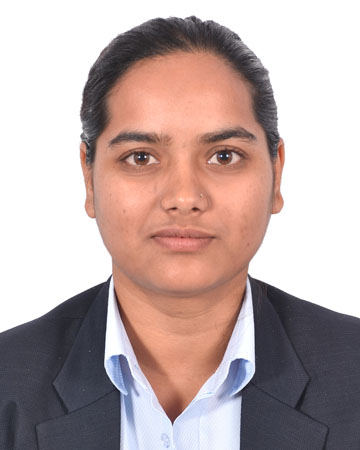
Bijaya Bhatta
Learning data science, machine learning and NLP, one step at a time
I'm interested to learn...........
01 — Abstract
About
Mathematics was my favorite subject in school and I enjoy solving problems. I have a curious nature of learning things in detail till I do not get satisfied . I have completed my Master Degree in Computer Engineering in Data Science and Analytics. My thesis was on Nepali texts summarization, which is a low resource language. My project work was on Loan Default Prediction using Machine Learning Tecniques. I am interested in machine learning and I am in my journey to learn and explore more about it.
Learning.
Seeking Growth.
02 — Interests
What I want to learn more of
Low-resource language models
My thesis worked with transformer architectures for Nepali — a language with little existing NLP tooling. It's the area I understand best, and the one I'd want to explore first.
Applied predictive modelling
Boosting and ensemble methods for credit risk and default prediction — hands-on work, not deep theory, but it's where I first got comfortable with a full modelling pipeline.
Medical image classification
Earlier coursework applying CNN architectures (AlexNet, VGG-16) to diagnostic imaging — malaria and blood cancer detection.
in any of these —
just genuinely interested.
03 — Record
Publications & projects
-
NepaliBART: Nepali Text Summarization using BART Transformer
Fine-tuned a BART-based transformer for abstractive summarization of Nepali text, addressing the shortage of NLP tooling for the language.
-
Enhancing Default Prediction using Boosting-based ML Techniques
Compared boosting algorithms for loan default prediction. Read the paper ↗
-
Comparison of ML Algorithms for Loan Default Prediction using SMOTE
Evaluated SMOTE-based resampling against class imbalance in credit default datasets. View poster ↗
-
Malaria Detection and Performance Evaluation using AlexNet and VGG-16
Benchmarked two CNN architectures for automated malaria detection from blood smear images.
-
Blood Cancer Detection using Image Processing
Image-processing pipeline for detecting blood cancer indicators, presented as a poster at the SET conference. View poster ↗
just what I've
actually built and finished.
04 — Record
Education
M.Sc. Computer Engineering, Tribhuvan University
Specialization in Data Science and Analytics. Thesis: "NepaliBART," supervised by Dr. Arun Kumar Timalsina. Grade: 87.27%.
Bachelor's Degree, Computer Engineering
Tribhuvan University. Project: Malaria Detection using AlexNet and VGG-16. Grade: 73.72%.
05 — Work
Experience
Computer Engineer, Nepal Telecom (Nepal Doorsanchar Company Ltd.)
Recruited via the Public Service Commission's competitive exam. Work spans SIEM, the email system, AAA services, and second-line FTTH support.
Computer Engineer, Government of Nepal
Recruited via the Public Service Commission's competitive exam. Worked in the Public Procurement Monitoring Office on the e-government procurement system. It was a short term experience for about 4-5 months.
06 — Toolkit
Skills & recognition
Python, Linux
Comfortable, not expert — I can build and debug a working pipeline.
PyTorch, TensorFlow, Git, IBM SPSS
Used across my thesis work and applied ML projects.
Merit-wise Scholarship
Institute of Engineering, Pulchowk Campus.
Mastery, not yet.
07 — Off the Record
Beyond work
When I'm not at a desk, I like listening to music and travelling around Nepal. It's a small country, but a varied one — you can go from Kathmandu's temples to hill villages to the Himalaya foothills in the space of a few hours' drive. And if you ever get the chance to visit Nepal, take it — it really is a beautiful country, and the people are as much a reason to come as the mountains are.
Himalaya.
Stay for the people.
08 — Record
Certificates
Short courses and training completed alongside my degrees and work.
steadily
stacked up.
10 — Correspondence
Get in touch
Open to conversations about Nepal Telecom and Nepal's data science scene.
Elsewhere
LinkedInLocation
Kathmandu, NepalReferences
Available on request